Singapore event management is the scientific process of planning, organizing, and executing events in Singapore. Events may be business meetings, product launchings, marriages, expos, music concerts, or even personal functions. Singapore is considered one of the best destinations to hold an event in Asia because of its excellent infrastructure, connections with other countries, and business-friendly environment.
Introduction to Technology in Event Management
Technological advancements have played a role in shaping how events are planned, organized, and performed. Technology has been key to improving the efficiency and intelligence behind the organization and implementation of events. With today’s technology, many software applications help to reduce unnecessary work while increasing the efficiency of events.
Evolution of Event Planning with Technology
In the past, all aspects related to events were planned manually. Events required invitations, tickets, schedules, and guest lists to be made manually by the event organizers. It usually resulted in confusion and error.
Everything has now been transformed by digital transformation:
- Invitations are being done using emails and digital invitations, instead of paper invitations.
- Online ticketing systems are being substituted with physical ticketing.
- QR codes and apps are used instead of manual attendance tracking.
- Face-to-face meetings are supported by video conferencing tools
This has transformed the management of events to be more organized, scalable, and professional.
How does Technology help in Event Management?
1. It turns chaos into a clear system
Digital tools enable event planners to divide a large event into small tasks. Nothing goes out of order–what to do, by whom to do it, and when to do it.
2. It connects everyone instantly
Technology eliminates the barriers of communication. All updates about organizers, staff, vendors, and guests arrive instantly in the form of apps, emails, or dashboards without delays and misunderstandings.
3. It makes events “self-managing.”
A lot of the work is automatically performed. Confirmation of tickets, reminders, invitations, and follow-up can be done without the need to do this by hand, hence the event operates on autopilot.
4. It improves the guest experience
There is never any queuing or searching at all because the attendees need not queue for information. All processes become easy and convenient due to QR codes, event applications, and check-in technology.
5. It expands events beyond physical limits
Through technology, anyone can participate remotely with online and hybrid events. An individual event can reach the whole world with just one event without any further physical installation.
6. It helps organizers learn from every event
After the event, technology captures feedback and other related data like attendance, engagement, and session performance. It helps planners to plan better for the next events by analyzing their actual performance.
Importance of Technology in Modern Event Planning
Technology has become a crucial part of modern event planning in that it makes the entire planning process easy. It also assists planners to handle invitations, communication, budgeting, and feedback effectively.
It also enhances teamwork, accelerates performance, improves guest experience, and provides real-time updates, which makes digital solutions essential to professional event managers nowadays.
Event Host in Singapore
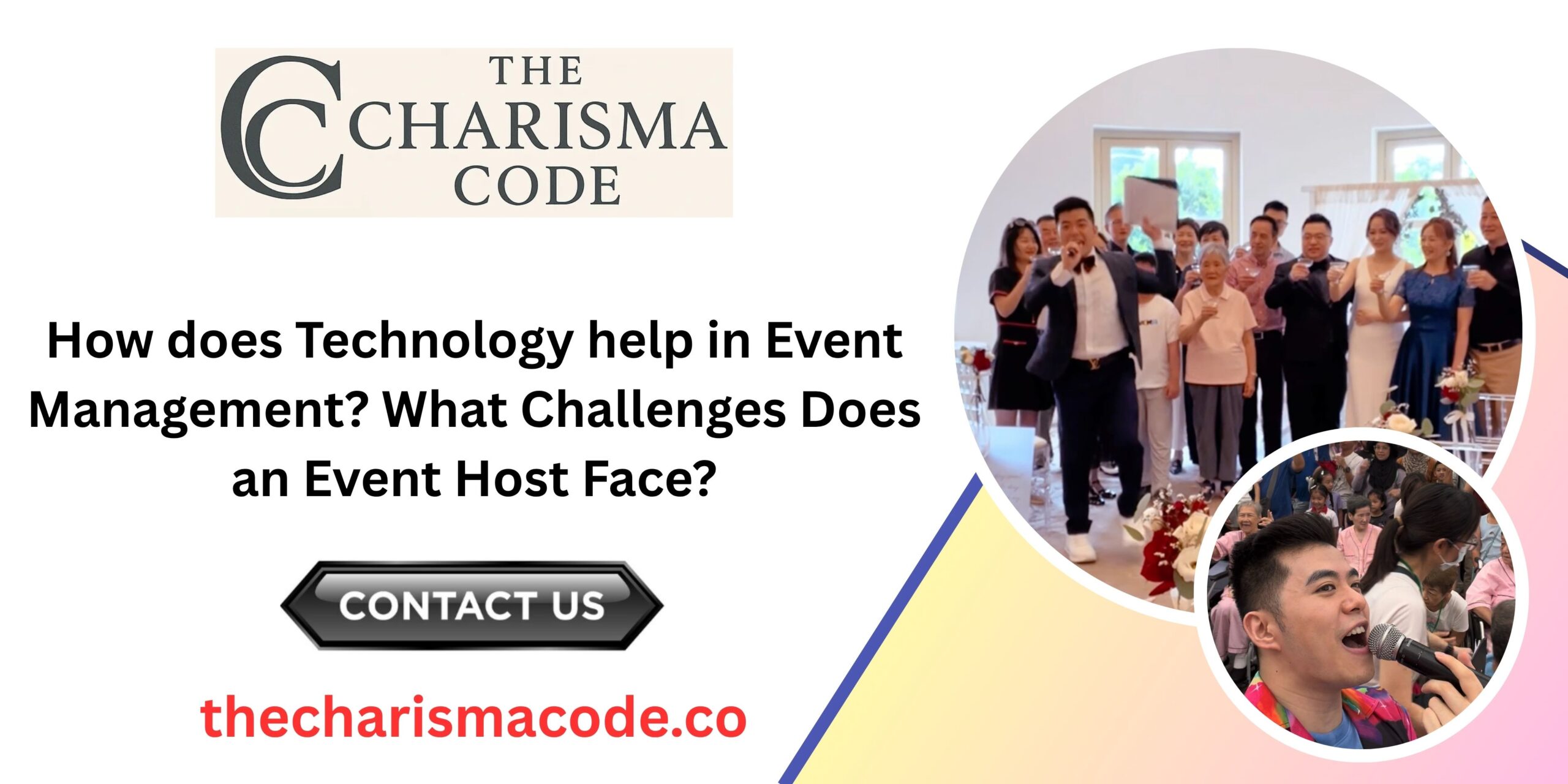
An event host in Singapore refers to a professional person who introduces, organizes, and directs an event to the point of completion. They are to make sure that there is nothing going wrong, the audience is attentive, and the program is running according to the schedule. Simply put, a host of an event is the face and voice of the event.
Event hosts are even more vital in a multicultural and dynamic environment such as Singapore since they need to handle various audiences, languages, and cultural expectations, and still be professional and energetic.
What Challenges Does an Event Host Face?
1. Reading the Room in Real Time
The event manager must understand the disposition of the attendees fast enough without any forewarning. Sometimes, the crowd is excited, while sometimes it is tired. The trick is to change the tone, energy, and humor in real time in a way that the event does not seem to be flat and awkward.
2. Managing Unexpected Timing Shifts
Things never occur precisely on time. Speakers can be late, Overruns can be done, or technical delays might occur. The host should fill gaps naturally without creating a sense of delayed response or confusion to the audience.
3. Handling Nervous or Uncooperative Participants
Not all speakers and guests are comfortable on stage. Others can freeze, talk too long, or be non-interactive. The host should carefully mentor them without making the event hectic and disrespectful
4. Maintaining Energy Across Long Hours
Most events take several hours, and maintaining energy is not easy. A host should ensure that he or she is enthusiastic and yet strong to maintain this interest until the end with voice, expression, and body language.
5. Dealing with Technical Disruptions
Failure of microphones, sound problems, light problems, or slide show problems could occur anytime. The host is required to remain relaxed, entertain the audience during breaks, and communicate silently with the technical crew.
6. Balancing Formality and Entertainment
There are different tones for various audiences. For a corporate event, one should have a professional tone. However, a wedding or party may need a tone that is filled with emotion and humor. The problem is the change of styles, but not to lose authenticity or the trust of the audience.
Expert Tips to Overcome Event Hosting Challenges
- Always prepare an elaborate event checklist.
- Establish a good rapport with suppliers and teams.
- Have contingency plans for all such areas.
- Use scheduling software for events.
- Simulate real-life situations, or practice.
- Be flexible and calm under stress.
Conclusion
The use of technology has made event management a very quick, structured, and data-oriented procedure, yet event hosts continue to experience real-time challenges such as getting control over the audience, timing, and technical difficulties. The ability to integrate intelligent technology with effective communication, flexibility, and self-assurance on the stage is a key to success.